Bhoomi RTC Online, Land records are among the most important government documents for any property owner, farmer, buyer, or legal representative. In Karnataka, the system that has transformed land record access is called Bhoomi. Through bhoomi online, people can check their land details, see ownership records, verify mutation status, view RTC (Pahani), download certified copies, and access many other land services without visiting government offices again and again.
The importance of bhoomi rtc goes far beyond just looking at property details. It supports ownership verification, helps in loan applications, assists in dispute resolution, and gives citizens a reliable way to confirm land information directly from government records. Before this digital system became common, land records were stored in paper form. That old method created delays, confusion, missing papers, and many mistakes. The move to bhoomi online changed this experience by making land data available in a digital format that is easier to search, easier to update, and easier to trust.
This article gives you a full understanding of bhoomi, how it works, what services it provides, why it matters, and how citizens can use it in day-to-day life. The language is kept simple, but the content is detailed enough to serve as a complete guide.
Bhoomi Online and the Digital Change in Karnataka
The idea behind bhoomi online is simple: land records should not remain hidden in file rooms or depend on manual handling only. Citizens should be able to access basic land information directly, securely, and quickly.
Karnataka introduced bhoomi to bring land administration into the digital age. The system was designed to improve transparency, reduce corruption, and make land records more reliable. Earlier, if a person needed an RTC copy or wanted to check mutation status, that person usually had to visit a revenue office, ask for help, wait in line, and sometimes return many times before the work was completed. For farmers and landowners in rural areas, this was often difficult because it took time, travel, and money.
With bhoomi rtc services available through the web, the same type of information can now be accessed more easily. The landowner can see record details, check updates, and track official changes in a more organized way. This has made land management smoother not only for citizens but also for banks, survey teams, legal authorities, and government departments.
The system also helps reduce human error. When records are written manually many times, mistakes can happen in names, survey numbers, crop entries, or ownership details. A digital system does not remove all problems, but it reduces them significantly and makes corrections easier to track.
What is Bhoomi RTC?
The term bhoomi rtc refers to the digital version of the land record document known as RTC. RTC stands for Record of Rights, Tenancy and Crops. In Karnataka, this document is also widely called Pahani.
RTC is one of the most useful land documents because it gives a complete picture of a land parcel. It usually includes the name of the owner, survey number, land area, land type, tenancy details, crop details, and other important information. For agricultural land, it can also show irrigation and crop-related data. This makes the document useful for many legal and financial needs.
A bhoomi rtc copy is often required when:
- Applying for a bank loan
- Verifying land ownership
- Selling or buying land
- Resolving ownership disputes
- Applying for some government support
- Proving land details in local offices or courts
Because this document contains multiple layers of information, it is one of the most trusted records in land administration. It is not just a simple paper. It is a legal and administrative reference document that can support many important decisions.
When a user views RTC through bhoomi online, the record is taken from the official land database. If the user gets a digitally signed copy, it becomes even more useful for official purposes. This is why bhoomi rtc has become such an essential part of property management in Karnataka.
Why Bhoomi Was Needed
To understand the value of bhoomi, it helps to look at the problem it solved.
Earlier, land records in Karnataka were mostly maintained on paper. That system had several weak points. If a file got damaged, torn, lost, or incorrectly updated, the whole land history could become confusing. Sometimes ownership changes were not entered on time. Sometimes mutation work stayed pending for long periods. Sometimes citizens had to depend on intermediaries to get even basic information.
This created three major problems.
First, the process was slow. A person could spend many days just trying to get a simple document.
Second, the system was not always transparent. It was difficult for a citizen to know what happened inside the office or why a file was delayed.
Third, the system was vulnerable to mistakes and misuse. If one line was written incorrectly, the whole record could become problematic later.
Bhoomi online was introduced to solve these issues. It made land data searchable, more visible, and easier to manage. Instead of keeping information locked in physical files, Karnataka began storing it in a form that could be handled digitally. This became a major step in public service delivery.
Main Services Available on Bhoomi Online
The bhoomi online portal offers many useful services. These services are designed to help people handle different types of land-related work in one place.
RTC Services
These services allow citizens to view and access:
- Current year RTC
- Old year RTC
- Mutation Register
- RTC information by survey number, owner name, or registration details
- Digitally signed RTC through paid service
Mutation Services
These help citizens:
- Check mutation status
- View mutation extract
- See ownership update details
- Follow the progress of land transfer records
Khata Services
Through bhoomi online, users can also access Khata extract services. This is useful for understanding property details, owner information, and property tax-related entries.
Survey and SSLR Services
These services support:
- Survey document viewing
- Requesting survey documents
- Revenue map access
- Land sketch and boundary-related information
I-RTC Wallet and Payment Services
The i-RTC wallet system helps users pay online for land record services and receive certified copies.
Report Services
The portal also provides several reports related to:
- Dispute cases
- Village-wise pendency
- Mutation history
- Aadhaar seeding
- Land beat monitoring
- Disposal reports
- Application tracking
This broad list shows that bhoomi rtc is only one part of a much larger land information system. The portal is more like a digital land service center that can support many different needs.
How Bhoomi Online Helps Citizens
The value of bhoomi online becomes clear when you look at how people use it in real life.
A farmer may need RTC to apply for a crop loan. A land buyer may need to verify ownership before purchasing property. A family member may need mutation records after inheritance. A lawyer may need land maps and ownership details for a dispute. A government officer may need to check survey details before approving a process. All these tasks become easier when land information is available in one digital place.
This is especially useful in villages and semi-rural areas where travel to government offices can take a lot of time. With bhoomi, the system becomes more accessible. Even though some services still require careful data entry or local office support, the first level of checking has become much easier online.
The portal also improves public trust. When records are visible and easy to cross-check, it becomes harder for fake claims or incorrect ownership entries to remain hidden. This is one of the strongest benefits of bhoomi rtc and the overall Bhoomi system.
Understanding the Structure of RTC in Detail
Because bhoomi rtc is such an important document, it is useful to understand what it generally contains.
The RTC record can include:
- Name of the landowner
- Survey number
- Sub-division details
- Land area
- Classification of land
- Crop details
- Irrigation source
- Tenancy information
- Loan or liability entries, if any
- Mutation reference details
Each part of the record has a purpose.
The owner name tells who the land belongs to. The survey number identifies the exact parcel of land. The land area shows how much land is recorded. The crop details help with agricultural planning and verification. The tenancy information may show whether someone else is using the land under a legal arrangement. The loan details can be important for banks and legal authorities.
Because all these items are placed together in one document, RTC becomes a powerful tool for checking the real status of land. This is why bhoomi rtc is often treated as a core document in Karnataka land work.
Why Mutation Matters in Bhoomi
Mutation is one of the most important parts of land administration. It means updating the ownership record after land changes hands. This can happen when land is sold, inherited, gifted, or divided among family members.
When mutation is completed, the government record changes to reflect the new ownership details. If mutation is not done, the old owner may still appear in the record. That can create confusion later.
In bhoomi online, users can check mutation status and view mutation extract details. This is useful because it tells whether the record has been updated or is still pending.
Mutation is important for many reasons:
- It keeps ownership records current
- It helps avoid disputes
- It supports legal proof
- It is useful for future property transactions
- It helps banks and government offices verify the latest data
A land parcel may be fully transferred in real life, but until the mutation is entered into the system, the record may not match the ground reality. That is why mutation is not just a technical step. It is a basic part of accurate land management.
Bhoomi Mutation Status: What It Means
Mutation status tells you where your land record update stands.
In simple words:
- If the mutation is approved, the change has been recorded
- If the mutation is pending, it is still under process
- If the mutation is rejected, the request was not accepted for some reason
People often check mutation status after selling or inheriting land because they want to know whether the record has been updated successfully. Through bhoomi online, this checking process becomes simpler.
A person may need this information for:
- Buying land
- Checking family property records
- Confirming updates after inheritance
- Following up on office work
- Avoiding future legal issues
The mutation status service helps bring clarity to land ownership changes, which is one of the central goals of bhoomi.
What is Khata Extract and Why Is It Useful?
Khata extract is another useful land-related document available through bhoomi online. It provides property details that may be used in tax, municipal, and legal matters.
A Khata extract generally includes:
- Owner name
- Property number or identification
- Property size
- Assessment information
- Tax-related details
- Location details
This document is especially useful in urban and semi-urban property matters. It may be needed for:
- Property tax payment
- Building approvals
- Ownership verification
- Property sale documentation
- Legal and municipal work
While RTC is more common in agricultural land discussions, Khata extract becomes important when property records and municipal records are involved. Having both records available in digital form makes bhoomi more helpful for a wider range of citizens.
Survey Services and Mojini in Bhoomi Online
Survey work is a very important part of land administration because land boundaries must be clear. If boundaries are unclear, disputes can happen. That is where survey services and Mojini come in.
Mojini is related to survey and sketch-based land information. It helps in understanding:
- Plot boundaries
- Land sketches
- Survey maps
- Exact physical layout of land
Through bhoomi online, citizens can access survey-related services that support land measurement and map checking. This becomes useful when:
- Land is being divided
- A boundary dispute exists
- Construction planning is needed
- A buyer wants to verify the exact land shape
- A surveyor needs official support records
Survey services help connect the digital record with the actual land on the ground. This reduces misunderstandings and makes the land system more practical.
Revenue Maps in Bhoomi Online
Revenue maps are another strong feature of the portal. These maps show land and village details in visual form. They are useful for people who want to understand the layout of land more clearly.
The map services in bhoomi online may include:
- Village maps
- Cadastral maps
- BBMP maps
- Lake maps
- Geo-referenced maps
A map can often explain a land area better than text alone. For example, if a person wants to know where one parcel begins and another ends, a map can help. If a dispute is about a shared border, a revenue map may be useful. If a planner needs to understand development area layout, a map becomes essential.
Revenue maps support:
- Boundary checking
- Survey work
- Property planning
- Dispute handling
- Official land verification
For this reason, maps are a major part of the wider bhoomi system.
Digitally Signed RTC and I-RTC
One of the most useful features in bhoomi online is the option to get a digitally signed RTC copy.
A digitally signed RTC is important because it carries government verification. It is more suitable for official use than a simple view-only copy. Users often need such copies for banks, legal offices, or government-related work.
The i-RTC feature allows a person to:
- Search the land record
- Confirm the details
- Make online payment
- Download the certified copy
This is convenient because it saves time and removes the need for repeated office visits. For many users, bhoomi rtc through i-RTC is the fastest way to get a trusted land document.
Step-by-Step Guide to Viewing RTC in Bhoomi Online
Now let us look at how a person can view RTC using bhoomi online.
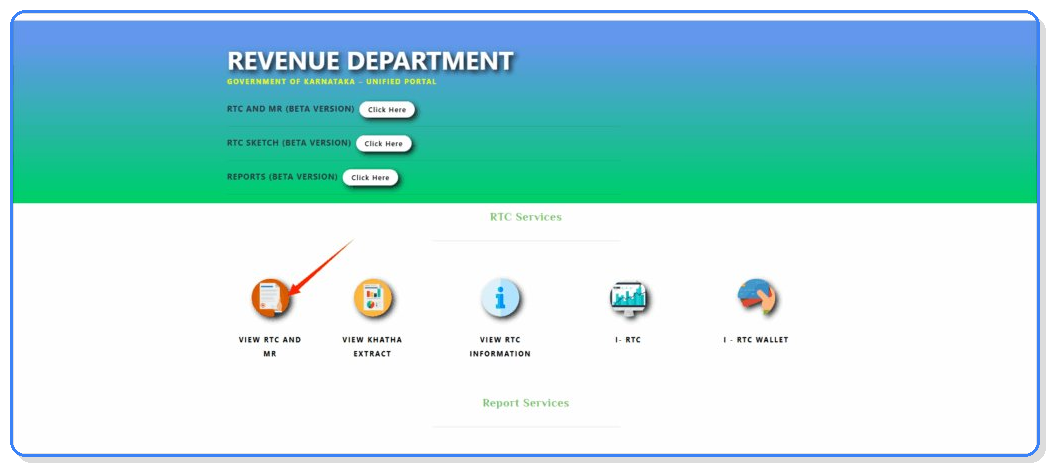
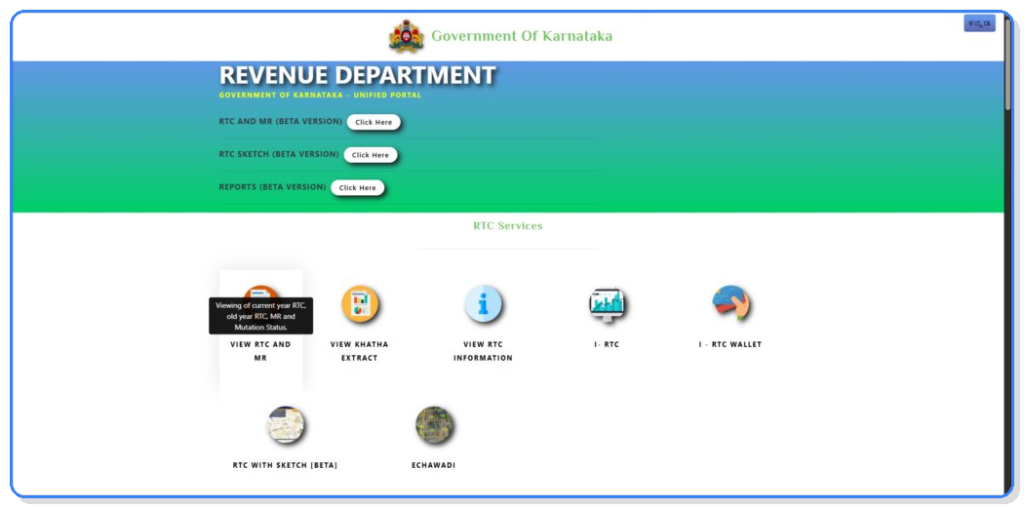
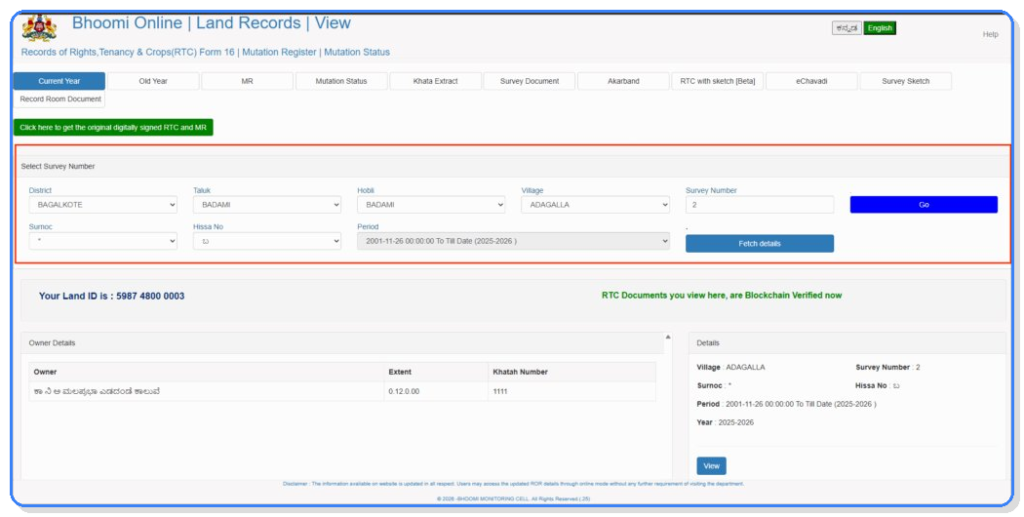
First, open the official Karnataka land records portal. Then go to the RTC or “View RTC and MR” section. After that, select your district, taluk, hobli, village, and survey number. Some forms may also ask for sub-division details like surnoc or hissa number.
Once the details are filled, click the button to fetch the record. The system will show the matching land details. At that point, you can review:
- Owner name
- Survey number
- Land area
- Crop details
- Tenancy details
- Other relevant data
If you need a certified copy, you may use the paid i-RTC option. This is a simple but important process because it gives direct access to bhoomi rtc records.
The main thing to remember is that the details must be entered correctly. A small mistake in survey number, village name, or taluk can lead to wrong results or no result at all.
Step-by-Step Guide to Checking Mutation Status
Mutation status checking is another common activity on the portal. In bhoomi online, the user usually starts from the RTC or MR section. Then the correct land details are entered.
The portal may ask for:
- District
- Taluk
- Hobli
- Village
- Survey number
- Sometimes surnoc and hissa number
After entering the data, the user fetches the details. The portal then displays the current mutation position. This helps the user know whether the record is completed, still pending, or unavailable.
This service is very useful because land ownership changes may take time to reflect in official records. By checking mutation status, citizens can follow the progress instead of waiting without information.
Step-by-Step Guide to Viewing Mutation Extract
Mutation extract is more detailed than simple mutation status. It can show the history of changes in ownership for a land parcel.
A user may enter the district, taluk, hobli, village, and survey number. After fetching the details, the portal may display a list of mutation records. The user can then choose a specific entry to view more information.
The mutation extract may show:
- Mutation number
- Date of mutation
- Transaction type
- Old owner
- New owner
- Reason for change
- Approval details
This record is very useful when someone wants to understand the complete transfer history of land. It gives more confidence when buying, selling, or legally verifying property.
How Bhoomi Helps Farmers
Farmers are among the biggest beneficiaries of bhoomi and bhoomi rtc services.
Farmers often need RTC records for:
- Crop loans
- Insurance claims
- Proof of ownership
- Subsidy support
- Agricultural planning
A farmer who can quickly access records through bhoomi online saves time and avoids unnecessary travel. This is especially valuable during busy farming seasons when time matters.
The RTC document also helps in situations where land ownership must be proven to banks or government officials. This makes the digital land record system very practical for agriculture.
How Bhoomi Helps Property Buyers
People buying land or property need to check records carefully before making a payment. The bhoomi online portal helps them verify the land before purchase.
They can check:
- Whether the seller is listed in the record
- Whether the survey number matches
- Whether mutation has happened
- Whether there are crop or liability details
- Whether the map or boundary information fits
This reduces the risk of fraud. A buyer can compare the online record with physical documents and decide more safely. In many property matters, a simple bhoomi rtc check can prevent big future problems.
How Bhoomi Helps Banks and Legal Work
Banks usually ask for RTC when a landowner wants a loan. That is because RTC acts as a strong record of land status. If a person wants to mortgage land or use it as security, the bank may verify the document through bhoomi online or ask for a digitally signed copy.
Lawyers and courts may also use these records in disputes. Since the system is government-backed, it becomes a dependable source for official verification.
In this sense, bhoomi rtc is not only useful for citizens. It is also useful for institutions that need trusted land data.
Common Mistakes People Make While Using Bhoomi Online
Even though the system is simple, mistakes can happen.
One common mistake is entering the wrong survey number. Another is selecting the wrong village or taluk. Some users also forget that the old year RTC and current year RTC may not show exactly the same details. Others may try to use a browser with poor internet connection and assume the record is missing.
To avoid confusion:
- Double-check survey details
- Use official portal links only
- Enter location data carefully
- Keep documents nearby while searching
- Use correct year selection when needed
These small steps can make bhoomi online much easier to use.
Why Bhoomi Online Is Important for Transparency
Transparency means that records should be visible, understandable, and trustworthy. That is exactly what bhoomi online tries to improve.
If citizens can see records directly, it becomes harder for misinformation to survive. If mutation changes are visible, it becomes easier to follow ownership updates. If survey maps are available, boundaries can be checked more clearly. If digitally signed copies are available, official work becomes smoother.
This transparency improves:
- Public trust
- Administrative efficiency
- Legal certainty
- Property safety
- Citizen confidence
For many people in Karnataka, bhoomi is now one of the first places they look when they need land-related proof.
Future of Bhoomi and Digital Land Records
The future of land records is likely to become even more digital. As systems improve, users may see:
- Better search tools
- Easier mobile access
- More document integration
- Faster service delivery
- Improved survey support
- Smarter land record mapping
The idea behind bhoomi is already strong. As technology improves, the system can become even better for citizens. In the future, people may be able to use land records with even fewer steps, fewer delays, and better accuracy.
Simple Summary of Bhoomi Online
In simple words, bhoomi online is Karnataka’s digital land record system. It helps citizens view RTC, check mutation status, access Khata extract, see revenue maps, and download certified land documents.
The most useful part of the portal is bhoomi rtc, which gives landowners and buyers direct access to important land details. It helps in legal work, loans, property verification, and dispute handling. The portal makes land record management easier, faster, and more transparent.
What is Bhoomi?
Bhoomi is the official digital land records system of Karnataka, created to make land information easy to access, accurate, and transparent. It was designed to replace the old paper-based system and give citizens online access to important land services.
Through bhoomi online, people can check bhoomi rtc, mutation records, Khata extract, revenue maps, survey documents, and other land-related services from one platform. The system helps farmers, landowners, buyers, banks, and government offices by providing reliable digital records.
The purpose of bhoomi is to reduce confusion, improve transparency, support property verification, and make land administration more efficient for everyone in Karnataka.